
Photography has always developed alongside my work as a journalist, interviewer and documentary filmmaker.
I began taking photographs more seriously in the late 2000s, initially with an approach closer to reportage photography. From the early 2010s, photography gradually became another professional aspect of my work, particularly within the film and festival world.
Over the years, my cameras have accompanied me almost everywhere my interviews and documentaries have taken me: film festivals, premieres, screenings, masterclasses, press events, award ceremonies and, of course, countless encounters with filmmakers and actors.
Without really planning it at first, I was gradually building another archive.
Not an audiovisual one this time, but a photographic memory of more than two decades spent around cinema.
From interviews to portraits
Portraiture naturally became an important part of this work.
When you spend years interviewing filmmakers, actors, producers and technicians, there are often opportunities to photograph them before or after a conversation. Sometimes there are only a few minutes available; sometimes there is enough time to create a more deliberate portrait.
This has allowed me to photograph an extraordinary range of personalities over the years.
Asian cinema — and particularly Hong Kong cinema — naturally occupies a major place in these archives. After more than twenty years of travelling, attending festivals and conducting interviews, I have photographed a very large number of the filmmakers, actors, producers and other figures who have shaped the Hong Kong film industry.
But my photographic work has never been limited to Asian cinema.
Festivals as a photographic playground
Film festivals have provided some of my favourite opportunities for photography.
Whether attending as a journalist, filmmaker or official photographer, festivals offer a completely different environment from a conventional portrait session. Everything happens quickly: encounters backstage, arrivals, discussions between screenings, masterclasses, red carpets, ceremonies and moments that sometimes last only a few seconds.
At the Sitges International Fantastic Film Festival, for example, I had the opportunity to photograph personalities from Hollywood, European and Spanish cinema alongside filmmakers and actors from Asia.
I have also photographed extensively at events such as the Vesoul International Film Festival of Asian Cinemas, in Hong Kong itself and around the Asian Film Awards, among many other festivals and professional events.
For several years, I also worked professionally within festivals themselves, including as an official photographer for L’Étrange Festival in Paris.
All of these experiences have contributed to an archive that mixes carefully composed portraits with something much more spontaneous: a visual record of film culture as I experienced it.
Hong Kong cinema through my lens
Hong Kong inevitably occupies a particularly important place in this photographic collection.
I began professionally documenting its cinema at a time when many of the personalities associated with its extraordinary creative period of the previous decades were still very active and regularly travelling internationally.
Some photographs were taken during formal interviews. Others came from festivals, premieres, professional events or more informal encounters.
Seen individually, they are portraits.
Seen together, twenty or more years later, they begin to tell a story.
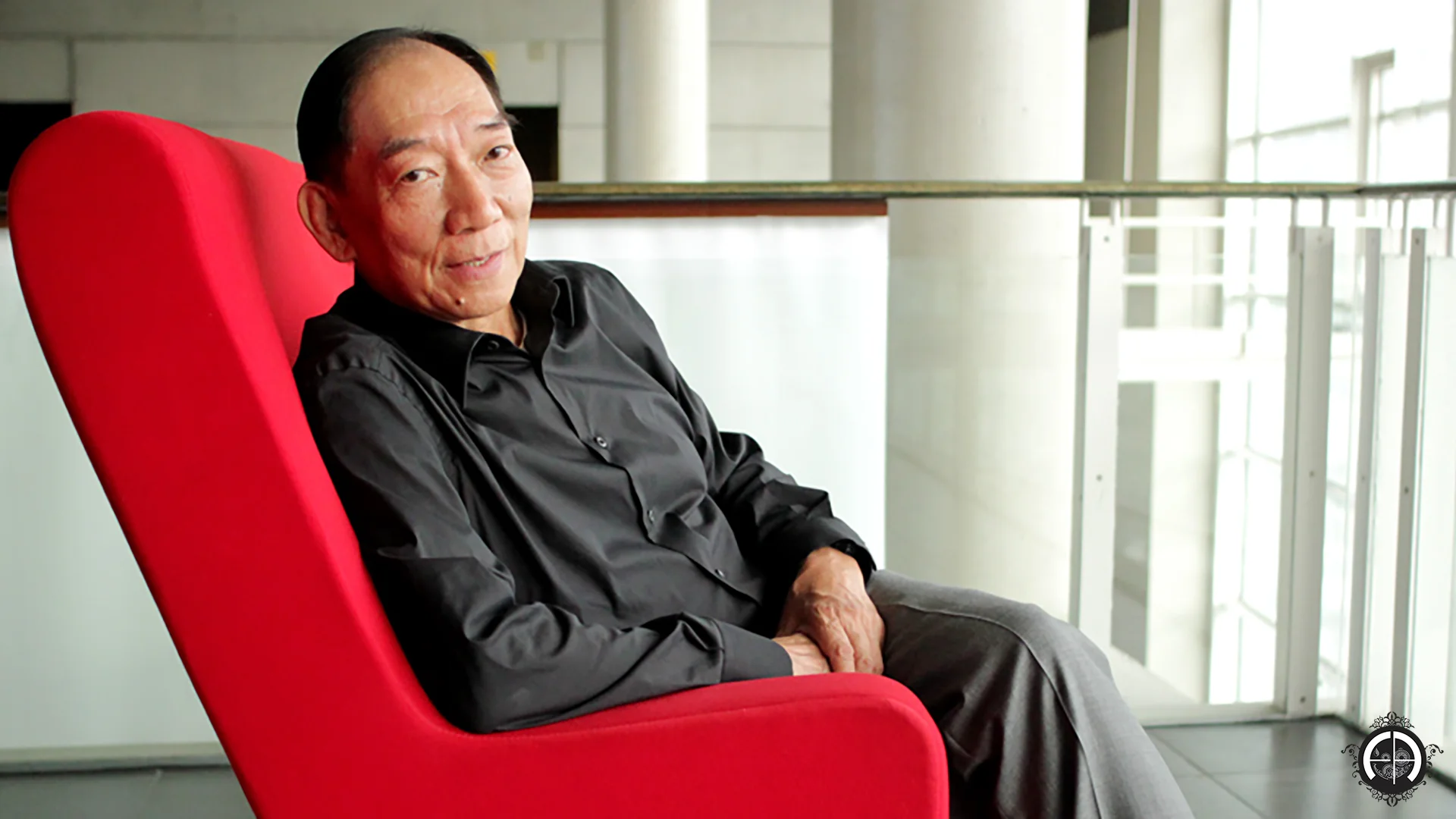
The photograph currently illustrating this article, for example, is a portrait I took of legendary action filmmaker and choreographer Yuen Woo-ping in Paris in 2012.
It is one photograph among thousands that I hope to gradually revisit, select, restore where necessary and bring back into circulation through this website.
From photographic archive to exhibition
In 2024, this accumulated work took on an entirely new dimension when Jean-Pierre Gimenez and Asia Expo Event gave me the opportunity to present a substantial selection of my photographic and personal archives devoted to Hong Kong cinema in Lyon.
For the first time, material accumulated through years of interviews, travels and encounters could be presented together physically rather than remaining on hard drives or in my personal archives.
The exhibition took place alongside Japan Touch, giving it exposure to a particularly large audience over the course of the event. With a substantial exhibition space at my disposal, I was able to bring together photographs and archival material representing different periods and personalities from Hong Kong cinema.
The experience was particularly meaningful because it demonstrated something I had not necessarily realised while taking all these photographs: an archive acquires a different meaning when individual images are brought together and shared with an audience.
The event also provided an opportunity to extend the exhibition through public discussions about Hong Kong cinema, including a round-table with David Martinez of HK Magazine and Florent Ditchy of the Hong Kong Film Festival of Paris.
It transformed what had begun as a photographic exhibition into something broader: an opportunity to connect images, personal memories and the history of a cinema I have been documenting for more than two decades.
Photography as memory
Documentary filmmaking and editing remain at the centre of my professional activity, but photography continues to be something I particularly enjoy.
And increasingly, I see my photographic and audiovisual archives as complementary.
An hour-long interview preserves someone’s voice, gestures and memories. A photograph does something different. It can preserve a face, an expression, a place or a fraction of a second that may acquire an entirely different significance twenty years later.
After more than two decades, I now have thousands of photographs spread across hard drives and archives, many of which I have rarely — or never — published.
One of my objectives with this website is therefore to gradually return to this material.
I want to select the strongest portraits, rediscover forgotten photographs from festivals and interviews, and build galleries connecting images taken across different countries and different periods of my career.
More from the archives
The Lyon exhibition was an important first opportunity to give part of this photographic archive a new life.
I very much hope it will not be the last.
In the future, I would like to develop other exhibitions and photographic projects from these collections, while continuing to photograph the filmmakers and personalities I meet today.
This section of the website will therefore evolve over time, combining portraits, festival photography, reportage and previously unpublished images from my archives.
Some were taken professionally as an official festival photographer. Others were captured while travelling as a journalist or filmmaker. Some were carefully planned; others happened almost by accident.
Together, they form another record of my journey through cinema.
The video archive preserves the conversations. The photographic archive preserves the moments.