
I have had the opportunity to meet and interview Dante Lam several times since my first trip to Hong Kong in 2002.
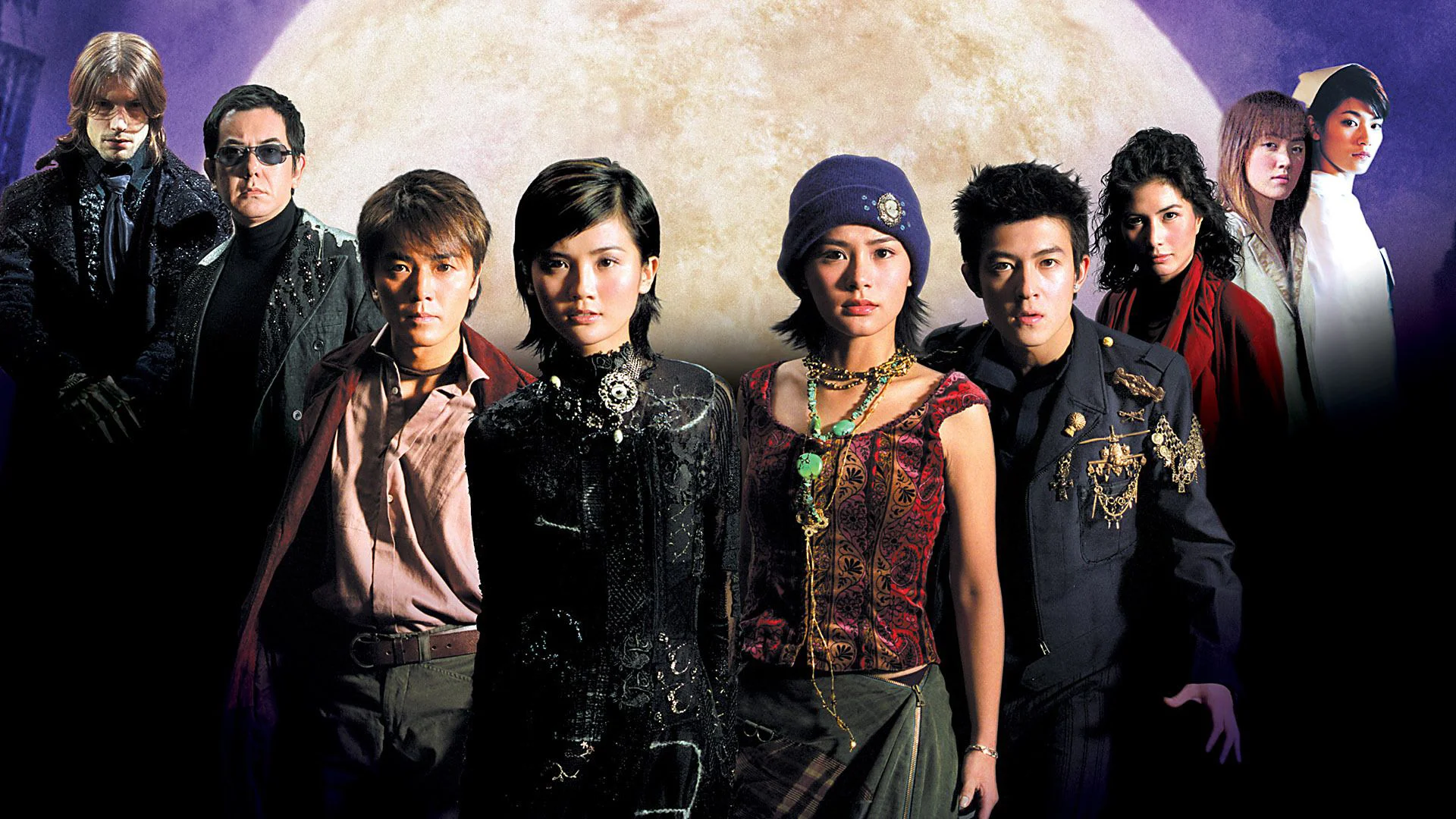
That year, I first crossed paths with him on the set of The Twins Effect — on a rather memorable night when Jackie Chan was filming his cameo and Donnie Yen was supervising the action. Not a bad introduction to a film set in Hong Kong.
Lam was already an established filmmaker, but his career has since developed on an extraordinary scale. After making his name in Hong Kong with films such as G4: Option Zero, Beast Cops, Hit Team, The Beast Stalker and The Sniper, he became one of the major directors of contemporary Chinese action cinema, with increasingly ambitious productions including Operation Mekong, Operation Red Sea, The Rescue, The Battle at Lake Changjin films and Operation Hadal.
But before the huge budgets and military blockbusters, Dante Lam’s filmmaking was deeply rooted in Hong Kong urban action cinema, with a particular interest in police tactics, firearms and the realistic mechanics of action.
His apprenticeship began long before he became a director. After entering the industry at Cinema City in the 1980s, he worked closely with Gordon Chan, notably as an assistant director on the first two Fight Back to School films starring Stephen Chow, before gradually taking responsibility for action sequences himself. He eventually made his official directorial debut with G4: Option Zero in 1997 and co-directed Beast Cops with Gordon Chan the following year.
The following archive interview combines conversations I recorded with Dante Lam during the 2000s and originally edited for publication in a French film magazine. It offers an interesting look back at the formative years of a director who would later become one of the biggest names in Chinese action filmmaking.
Enjoy the interview.
When did you first enter the film industry?
Dante Lam: In 1984, as a production assistant at Cinema City, the company that had been founded a few years earlier by Karl Maka, Raymond Wong and Dean Shek.
The first film I worked on was Ringo Lam’s Mad Mission 4, but my job was essentially administrative. I spent all my time in an office, so I wasn’t actually present on the set.
Did you really begin working “in the field” when you started collaborating with Gordon Chan?
Dante Lam: Yes. That began in the early 1990s with Fight Back to School 1 & 2, the comedies directed by Gordon Chan and starring Stephen Chow as a police officer who goes undercover in a school.
In those films, he belongs to the Hong Kong Police Force’s Special Duties Unit (SDU). I worked as an assistant director on both films and was particularly involved in the research for all the action-related parts of the films.
Most of Fight Back to School 2 is comedy, but the final third suddenly becomes much more serious and action-oriented. Why such a contrast?
Dante Lam: When we made the first Fight Back to School, only the opening sequence really dealt with the SDU and its intervention methods.
When the film came out, the response to that sequence was so enthusiastic that everybody wanted to see more of that kind of material in the sequel. Gordon and I were very confident that we could do it properly, so it was a natural progression.
I’ve always loved guns, and Gordon did too, although he was particularly interested in the strategic side of police special forces. Our objective was to present the action realistically and find a different approach from what had been done before.
So, in a sense, the complete opposite of John Woo’s approach?
Dante Lam: I don’t think there is necessarily a conflict between the romantic approach of John Woo’s films and the more realistic approach of the films I made with Gordon Chan. Ringo Lam also often adopted a realistic approach to action.
What I wanted to do differently from earlier action films involving the police was concentrate on the details.
I don’t think there had been a great deal of research into the SDU before Gordon Chan’s films. It was the details of the action that interested me, rather than the style itself.
So you conducted extensive research?
Dante Lam: Absolutely. Whenever I found relevant information in newspapers, I would cut it out and collect it.
Later, when I was preparing First Option, I conducted extremely extensive research for about twenty-four months. Some of what I found was useful for that particular film and some wasn’t, but I accumulated a lot of interesting material that I could use later.
That’s one of the reasons I subsequently made films such as G4: Option Zero and Hit Team.
Had you already directed scenes in Gordon Chan’s films before officially becoming a director?
Dante Lam: When I worked for major directors as an assistant, I was confident in what I was doing and they trusted me, particularly when it came to designing action sequences.
So yes, I had opportunities to gain practical directing experience before officially becoming a director, on films such as First Option and 2000 AD.
The first film I officially directed was G4: Option Zero in 1997, followed by Beast Cops, which I co-directed with Gordon Chan.
How did you make the transition to directing your own film?
Dante Lam: When I was working on First Option, I was responsible for many of the film’s action scenes, and people noticed my work.
I had the opportunity to meet director Derek Yee, who was working with Golden Harvest at the time, and I told him about G4: Option Zero, which I wanted to direct.
He believed in the project and we began developing it together, but during the creative development process the story started moving in a direction that I wasn’t comfortable with, so I eventually walked away.
In the end, Gordon Chan saved the project by taking it to Media Asia and becoming the film’s producer.
How did you become involved with The Twins Effect?
Dante Lam: The producer, Mr. Carl Cheung, came up with the concept of putting the Twins in a vampire movie with a lot of fighting.
At that point there wasn’t really a clear direction for the story. When he approached me, he asked me to develop it so that we could then make the film.
In any case, neither the final version nor even the version developed during production was the original story I had imagined. The first version I wanted to make was a very large-scale spectacle that the production simply couldn’t afford.
As a director, how different was The Twins Effect from your previous films?
Dante Lam: The Twins Effect was the biggest-budget film I had directed at that point.
When you start working on a production of that scale, you suddenly have to deal with many new factors. It’s a little like politics: in order to reach a result that everyone can approve, compromises have to be made.
I think The Twins Effect ultimately became more of a technical showcase than a film with a genuine artistic intention.
What was your experience of working with the Twins and Donnie Yen?
Dante Lam: When I worked with the Twins, they were already quite mature professionally and knew their jobs very well. I thought they were excellent and extremely professional.
As for Donnie Yen, it was the first time we had worked together, and we tried to find common ground so that we could collaborate smoothly and professionally.
Interview material recorded by Frédéric Ambroisine in October 2005 and October 2007.
Special thanks to Patty Keung.