
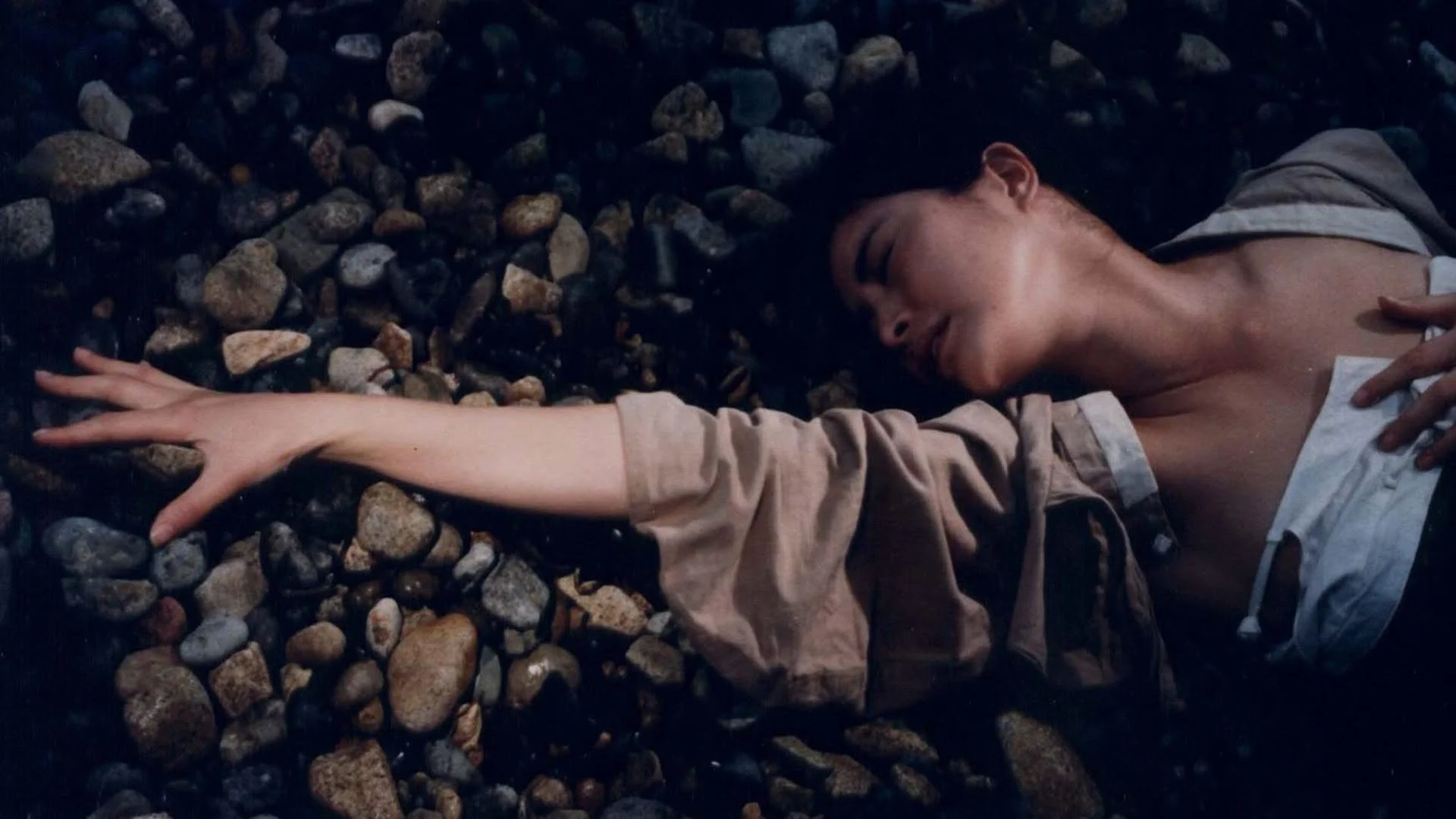
At the end of 2022, I began discussing a rather ambitious project with legendary Korean filmmaker Chung Chang-wha, internationally renowned as the director of King Boxer (1972): bringing back into circulation a group of films he produced in South Korea between 1979 and 1985.
Four years later, this long-term project is finally beginning to take shape.
A total of thirteen Korean films are involved, many of which have remained virtually unseen outside South Korea for decades. The surviving original film elements have been preserved by the Korean Film Archive (KOFA), and several of the films are now undergoing restoration from original elements scanned in 4K.
For me, this is a particularly important film heritage project. It follows the work undertaken on the restoration and international rediscovery of Lo Lieh’s The Black Magic with Buddha (1983), and once again I am working with the trust and support of Karmax-910, while collaborating closely with the Korean Film Archive and our partners in South Korea.
A relationship going back more than twenty years
My connection with Chung Chang-wha goes back much further than this project.
I first met and interviewed him in 2003, while preparing a documentary about his career for the French DVD release of King Boxer by Wild Side. We remained in contact over the years, and nearly two decades later our conversations eventually led to the idea of revisiting another, much less internationally known chapter of his career: his work as a producer.
These films belong to a particularly fascinating period of Korean cinema. Produced between the late 1970s and the mid-1980s, they were made under circumstances very different from those of the Korean film industry we know today. While a few co-productions travelled internationally, most of these titles had extremely limited exposure outside South Korea and have remained inaccessible to international audiences for decades.
Rediscovering them today therefore means more than simply bringing old films back into circulation. It means opening a small window onto a largely forgotten part of Korean film history.
Thirteen films, many different genres
One of the things that makes the Whapung catalogue particularly interesting is its diversity.
This is not a collection devoted to a single genre. The films move between melodrama, action, comedy, martial arts and popular Korean cinema, including some rather unexpected combinations, even a parodic kung-fu film.
Together, the thirteen titles offer a glimpse of the variety of commercial filmmaking being produced in South Korea during this period, with films and filmmakers that remain largely unknown to audiences outside the country.
And this is precisely what makes the project so exciting to me: there are still films, stories and entire areas of Asian cinema waiting to be rediscovered.
Restoring the films and bringing them back to audiences
The first major challenge has been preservation.
Working closely with the Korean Film Archive, which preserves the surviving original film elements, we have been able to locate and access materials that can now serve as the basis for new restorations. The films currently being restored are being reconstructed from original elements scanned in 4K, with the objective of creating new masters capable of giving these works a genuine second life.
But restoration is only part of the project.
The ultimate goal is to make these films available internationally for the first time on a meaningful scale. With the trust and support of Karmax-910, I am working on the project and its worldwide exploitation, with the hope of presenting the restored films at international film festivals and finding distribution partners in different territories.
There is still considerable work ahead, but after several years spent locating materials, researching the films and working with our partners in South Korea, seeing the restorations actually taking shape is an extremely rewarding moment.
More to come
I originally created a Facebook page devoted to the Whapung productions, where I have already shared information, photographs and material related to some of these films. Those interested in following the project can find additional material there.
From now on, I will also use this website — as well as CineFlamme and CineMagma — to document the progress of the restorations, introduce individual films and share news as the project develops.
Hopefully, there will be much more to announce very soon.
Above all, I would like to warmly thank Mr. Chung Chang-wha for the trust he has placed in me with films that represent an important part of his career as a producer, as well as Karmax-910, the Korean Film Archive, and everyone in South Korea who has been helping us make this unusual project possible.
After remaining largely invisible internationally for more than four decades, these films deserve the opportunity to be seen again.
And I very much hope that this is only the beginning.